
How Differently Empathy Is Practiced for Celebrities Who Died Compared to Other People


One of the sad realities about grief is that it lasts longer than people’s empathy and support does. Except when it comes to celebrities.
Celebrity grief and civilian grief differ fundamentally in how society validates the loss and the rituals available to process it. How fans practice grief with celebrities is called parasocial grief—a one-sided emotional bond where fans feel they "knew" the celebrity through their art, music, or films, even though the fans never met them.
While empathy for celebrities is practiced performatively and collectively on a massive scale through social media and intellectualized, romanticized, or turned into a cultural milestone, empathy for ordinary people is not practiced at all or falls short.
How fans react to a celebrity’s death has a lot to do with how they give celebrities way too much clout, attention, and admiration when they are alive. The only difference between them and the rest of the population is that they have perfected a specific talent, like singing, dancing, acting, hitting or pitching a baseball, shooting a basketball, passing or running with a football, or hitting a tennis or golf ball. Or they may have gained royalty or political status, like a king, queen, or president.

Fans of celebrities will make time and spend money to wait in line for hours to watch them perform or get their autograph. And after they die, fans will even visit their graves. But will not expend the same empathy, amount of time, and money to do the same for other people who have lost a loved one.

Each time a celebrity dies, newspapers run front-page coverage, and social media goes into overdrive with hundreds of thousands, and sometimes millions, of likes and/or comments. In some cases, people host candlelight vigils with large attendance numbers. They also honor them for many years after their death.

For the last 49 years, dedicated fans have mourned Elvis Presley’s death and traveled thousands of miles to visit his grave in the Meditation Garden at his Graceland Estate in Memphis, Tennessee, to pay their respects. It is estimated that 600,000 fans visit each year. Some visit his grave multiple times, and admission is now $28.75. Yearly attendance at some other celebrity gravesites is in the millions, like Jim Morrison’s gravesite in Paris, Vladimir Lenin's in Moscow, and John F. Kennedy's in Arlington Cemetery.
Other celebrity gravesites fans visit include Princess Diana, Michael Jackson, Marilyn Monroe, Judy Garland, Frank Sinatra, Bette Davis, Elizabeth Taylor, and John F. Kennedy. Fans even make time to visit the gravesites of convicted murderers and gangsters.
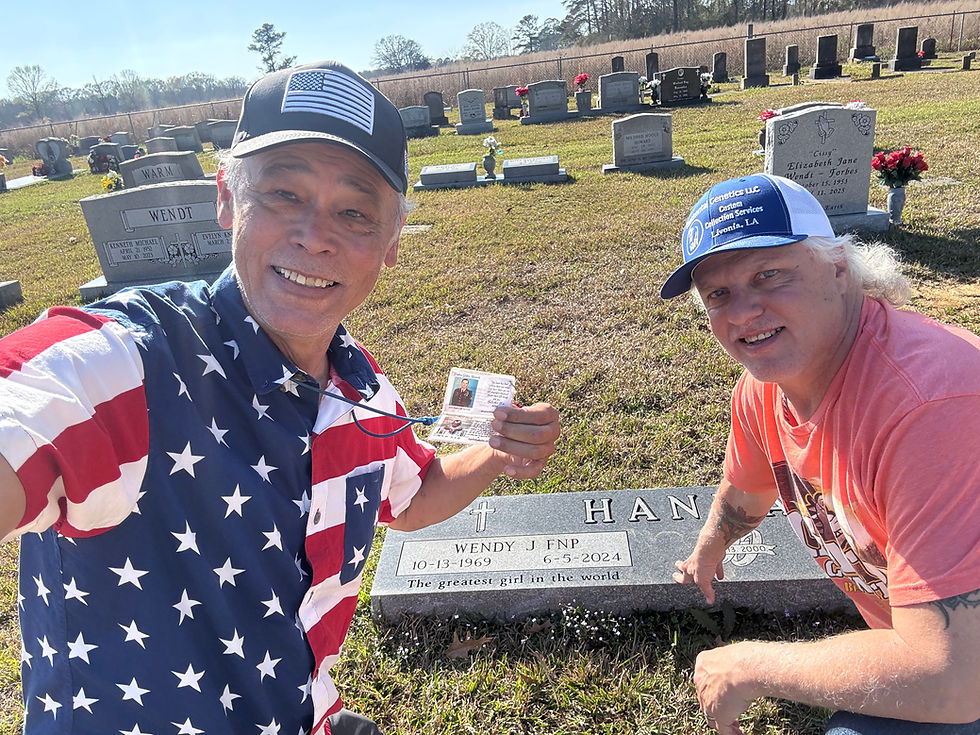
For those of you who have lost a loved one, have you ever accompanied a relative, friend, neighbor, or co-worker to visit their loved one’s gravesite?

We all know the honest answer. Most people who have lost a loved one get so caught up in their grief that they won’t make time to practice the very act they expect from others who are also grieving: empathy.
Here are examples of how people fail to practice empathy.
I often hear spouses, mostly wives, tell me that their husband won’t accompany them to their loved one's gravesite. Shame on the husband or wife who doesn’t visit the gravesite with their spouse.
I’ve also heard from spouses who said that their spouse won’t accompany them to a grief support group. Shame again.
Most people make excuses not to visit a loved one’s gravesite or attend a grief support group. The most common excuses are emotional pain, personal beliefs about where a soul resides, or discomfort. The truth is that no excuse is legitimate.
I love this quote about excuses. An excuse is self-abuse. It is often attributed to spiritual and personal growth teachers like Yogi Bhajan. Making excuses keeps you stuck, limits your potential, and inflicts subtle psychological harm on the people you love and, more importantly, on your personal growth and ability to heal and move forward with life.
No matter how uncomfortable a spouse feels, they should support their spouse by joining them at the gravesite or attending a grief support group.
Remember the golden rule: “Do unto others as you would have them do unto you.” It also applies to empathy.
Empathy is a two-way street. If people seek empathy from others, they must practice it too.
Accompanying a person who has lost a loved one to the gravesite doesn't take that much time. Here is one simple and practical way to do it. Find 12 people and designate the month they can commit to visiting the grave site. This way the responsibiity is shared and the primary griever has a different person accompanying them each time they visit the gravesite.
Here is a list of ways to practice empathy for others grieving the loss of your loved one. This list will hopefully remind you that you’re not the only one grieving.
Invite a friend, neighbor, or co-worker to accompany you to a grief support group. This way, you won’t attend alone and can support someone else who is also grieving. More importantly, they will better understand your grief and theirs, too.
For parents who have lost a child, show up with your spouse at the grief support groups. Even if a spouse doesn’t want to attend for himself or herself, attend for your spouse and surviving children.
If you know a person who lost their spouse or child, send them a “Happy Heavenly Birthday” message or card on their loved one's birthdate.

Visit another person who has lost a loved one at their home (regardless of how their loved one died) and give them permission to talk about their grief and just listen. Be a listener for someone else in the same way you’d like someone to listen to you.
Buy a grief book you’ve read and liked for someone else who is grieving.
Volunteer at a grief support group for as much time as you can.
If you have practiced empathy for someone else, please share what you did for them in the comments section.
Together, Let’s break the silence and heal with grace, peace, and Harmony!


Comments