
Guest Blog by Joan Brenton


Joan Brenton is the grandmother of 10-year-old Miya Brenton, whose essay I posted in the last Blog.
Unshaken: Finding Purpose After the Loss of My Son by Joan Brenton
Some moments in life divide everything into a before and an after. For me, that moment came when I lost my only son, Tyler, to fentanyl poisoning.
The day Tyler died, my world shattered. As a mother, I never imagined I would outlive my child. Like many parents, I dreamed of watching him build his future, grow older, and create a life filled with possibilities. Those dreams were taken away in an instant.
Tyler's death was not just a personal tragedy; it was part of a much larger crisis affecting families across our communities. Fentanyl continues to claim lives at an alarming rate, leaving behind parents, children, siblings, and friends struggling to understand how such a devastating loss could happen.

What many people do not understand is that when a child dies, a part of the parent dies too. The grief is profound, lifelong, and impossible to fully describe. Yet amid that unimaginable pain, I found myself responsible for helping another grieving heart heal: my granddaughter, Miya.
At only seven years old, Miya lost her father. I lost my son. Together, we entered a journey of grief neither of us chose, learning how to carry our sorrow while finding reasons to keep moving forward.
For a long time, I struggled to make sense of what had happened. My heart was filled with questions that would never be answered. I replayed memories in my mind and wondered if there was something I could have done differently. Like many grieving parents, I wrestled with guilt, anger, sadness, and helplessness. Grief is rarely one emotion; it is a storm of many emotions that come and go without warning.
Some mornings, the weight of loss felt unbearable. There were days when simply getting out of bed required every ounce of strength I possessed. Yet life continued. Miya depended on me. She needed someone to reassure her that she was safe, loved, and not alone in her grief.
In many ways, she became my reason to keep moving forward.
There were mornings when grief sat heavily on my chest, making even the smallest tasks feel impossible. Yet each day, I rose because Miya needed breakfast, comfort, reassurance, and someone to help her navigate a world that had suddenly become uncertain. It was during those moments that I learned resilience is not the absence of pain. Resilience is choosing to keep going while carrying pain with you.
As we learned to navigate this new reality together, I discovered that grief looks different through the eyes of a child. Children ask honest questions. They experience sadness, confusion, anger, and fear, often all in the same day. Sometimes they appear resilient, only to be overcome with emotion weeks later.
Supporting Miya taught me that healing is not about avoiding grief. It is about making space for it.
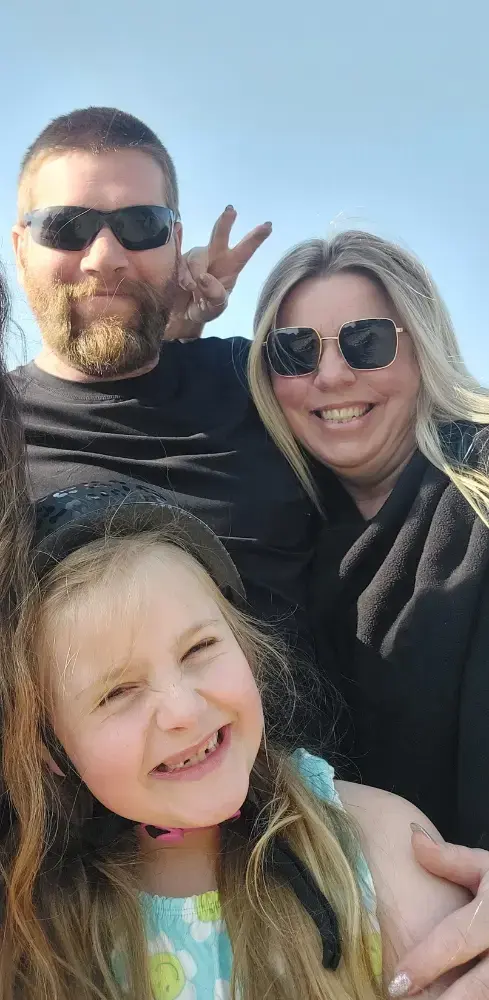
I wanted her to know that her father mattered. I wanted her to remember his smile, his laugh, and the love he had for her. I wanted her to understand that although he was gone physically, he would always remain a part of her story.
I still remember Tyler's laugh filling a room. He had a way of making people feel welcome, even during difficult times. Sometimes, when Miya smiles a certain way, I catch a glimpse of her father and am reminded that a piece of him lives on. In sharing memories of Tyler with Miya, I found healing for myself.
I learned that grief and love are forever connected. The depth of our grief reflects the depth of our love. We grieve because someone mattered. We grieve because they left a mark on our hearts that can never be erased.
Over time, I began to realize that our story could help others. Throughout my life and career, I have worked with children and families. I have supported parents facing challenges, children experiencing transitions, and families coping with loss and trauma. Yet after losing Tyler, my understanding of grief changed forever.
What had once been professional knowledge became lived experience.
Loss taught me that strength is not about being unbreakable. Strength is allowing your heart to break and still remaining open to love. Before losing Tyler, I thought strength meant solving problems and finding answers. After losing him, I learned that true strength sometimes means surviving what cannot be fixed.
I came to understand how isolating grief can feel. Many people want to help but are unsure what to say. Others avoid conversations about loss altogether because it makes them uncomfortable. As a result, grieving individuals are often left feeling invisible at the very time they need support the most.
I also learned that there is still tremendous stigma surrounding overdose deaths and fentanyl poisoning. Families are often met with judgment when they desperately need compassion. Behind every statistic is a person who was loved and a family whose lives will never be the same.
My son was not a statistic. He was a son, a father, a grandson, a friend, and a person deeply loved by many.
When we reduce people to the circumstances of their death, we lose sight of their humanity. I want the world to remember that every person lost to fentanyl was someone's child. Every life mattered.
As I continued on my grief journey, I became increasingly committed to helping others break the silence surrounding loss. Healing often begins when we feel safe enough to share our stories. When people tell their grief stories, they discover they are not alone. They find connection, understanding, and hope.
That is why opportunities like this Let's Talk Grief book matter.
The more we talk about grief, the less isolated grieving people feel. The more we share our stories, the more we create communities rooted in compassion rather than judgment. We give others permission to express their pain, ask for help, and openly remember their loved ones.
Resilience did not arrive as a moment of triumph. It arrived quietly, one day at a time. It was found in preparing school lunches when my heart ached, in answering Miya's difficult questions, and in finding the courage to speak Tyler's name, even as it brought tears to my eyes. I discovered that resilience is not about leaving grief behind. It is about carrying grief with grace while continuing to move forward. Every step I took became proof that love was stronger than despair.
Today, two and a half years after Tyler's death, grief remains a part of my life. It has changed shape, but it has never disappeared. There are still moments when a memory, a photograph, or a simple thought can bring tears to my eyes. There are still milestones I wish he were here to experience.
But alongside the grief, there is gratitude.
I am grateful for every memory I have of my son. I am grateful for the lessons he taught me. I am grateful for the privilege of raising Miya and watching her grow into a beautiful, resilient young person. I am grateful for the people who stood beside me when my world fell apart.
Most importantly, I am grateful for the opportunity to transform pain into purpose.
For a long time, I was broken.
Not the kind of broken that people could easily see, but a quiet brokenness that lived deep within my soul. I carried on because I had to. I cared for Miya. I went to work. I showed up for the people who depended on me. From the outside, it may have appeared that I was managing.
Inside, however, I was struggling to understand how a mother survives the loss of her only child.
The world kept moving, yet part of me felt frozen in the moment I learned Tyler was gone.
I spent countless hours asking questions that had no answers. Why Tyler? Why our family? Why did this happen? I searched for meaning in a tragedy that seemed completely meaningless.
For a long time, I believed moving forward meant leaving something behind. I thought that if I accepted Tyler's death, I would somehow be letting him go.
Then came the moment that changed everything.
My aha moment did not happen all at once. It unfolded softly, like the first light of dawn after a long and stormy night.
One day, as I reflected on my life, my work, my experiences, and even my pain, I felt something shift deep within me.
I realized that everything I had lived through had been preparing me for something greater.
My childhood experiences.
My work supporting children and families.
My love for helping others.
My journey through motherhood and grandmotherhood.
Even the devastating loss of Tyler.
For the first time, I saw a thread connecting it all.
I suddenly understood that my story was not meant to remain hidden.
It was meant to be shared.
In that moment, I stopped asking, "Why did this happen to me?"
And I began asking, "How can I use this experience to help someone else?"
That question changed my life.
As I sat quietly with that realization, another thought came to me, one that felt bigger than anything I had ever considered before.
What if this was part of my soul's contract?
What if, long before I arrived here, there was an agreement that I would experience profound loss, unimaginable heartbreak, and extraordinary love, not as a punishment but as a pathway?
Not because I deserved pain, but because I would one day transform that pain into service.
I cannot explain that feeling logically.
I only know that it settled into my heart with a sense of peace I had not felt since Tyler died.
For the first time, I stopped fighting against my story.
I accepted it.
Not because I liked it.
Not because it was fair.
Not because it hurt any less.
But because I understood that acceptance was not surrender.
Acceptance was choosing to walk forward while carrying the truth.
It was choosing to honor Tyler's life instead of allowing his death to define mine.
That was the moment I knew I was ready to write.
Ready to tell the truth.
Ready to share the parts of my life I had hidden.
Ready to allow others to see both my wounds and my healing.
Ready to turn my grief into a gift for others.
This essay was born from that moment.
Losing Tyler changed me forever. It deepened my compassion, strengthened my resilience, and gave me a greater understanding of the struggles faced by grieving families. While I would give anything to have my son back, I have chosen to honor his memory by supporting others, sharing my story, and helping people find hope in their darkest moments. Grief shaped me, but it did not define me. Instead, it revealed who I was capable of becoming.

I now believe that Tyler's life continues to guide me.
Every chapter I write feels like a conversation with him.
Every story I share feels like a way of keeping his memory alive.
Every person I help feels like a continuation of the love he left behind.
And I know this essay is only the beginning.
There is so much more for me to do.
I will organize a Walk for Lives in Tyler's memory so families can gather, remember, heal, and bring awareness to the ongoing fentanyl crisis.
I will continue supporting our youngest learners through SunBeams, helping children build resilience, emotional well-being, confidence, and hope.
I will speak whenever I am given the opportunity, sharing my experiences of grief, healing, resilience, and hope.
I will advocate for grieving families.
I will encourage conversations that break stigma and replace judgment with compassion.
I will remind people that every life has value and every story deserves to be heard.
I will stand beside those who are struggling, helping them discover that even in their darkest moments, hope still exists.
Most importantly, I will continue living in a way that honors Tyler.
The tragedy of losing my son will always be part of my story, but it is no longer the entire story.
Today, I see something I could not see in those early days of grief.
I see purpose.
I see possibility.
I see a future still waiting to unfold.
And I believe the strongest chapters of my life are still being written.
If you are reading this while carrying the weight of loss, I want you to know that your grief matters. Your loved one matters. Your story matters.
There is no timeline for healing. There is no right or wrong way to grieve. Some days will feel impossible. Others will bring moments of joy that may surprise you. Both are part of the journey.
Be gentle with yourself.
Allow yourself to remember.
Allow yourself to cry.
Allow yourself to laugh.
And when you are ready, allow yourself to talk about your loved one.
The death of my only son forever changed my life. It broke my heart in ways I never knew were possible. Yet it also revealed a strength I did not know I possessed. It taught me that even in our darkest moments, hope can still exist. Love can still exist. Purpose can still exist.
This chapter is not only about the loss of my son.
It is about the woman I became because of that loss.
A mother whose heart was broken but not defeated.
A grandmother who chose love over despair.
An advocate who found purpose through pain.
A woman who discovered that resilience is not surviving without scars, but learning to carry those scars with grace.
A woman who chose to transform heartbreak into hope.
A woman who chose to turn grief into service.
And a woman who, despite life's greatest storm, remained unshaken.
I carry Tyler with me every day.
I carry the grief.
I carry the love.
I carry the lessons.
I carry the purpose that emerged from the pain.
And I believe that by sharing our stories, we help others find the courage to carry theirs.
I remain a mother.
I remain a grandmother.
I remain an advocate for grieving families.
I remain a champion for children.
I remain committed to helping others heal, grow, and find hope.
And as I move into the next chapters of my life, I do so with courage, faith, gratitude, and determination.
Because this essay is not the end of my story. It is the begining of a new chapter.
A chapter where pain becomes purpose. Where loss becomes legacy. Where grief becomes service. Where love continues beyond death. Where one mother's journey becomes a light for others finding their way through the darkness. And where I continue to stand tall, speak boldly, love deeply, and serve wholeheartedly.
I remain Tyler's mother.
I remain Miya's grandmother.
I remain a voice for the grieving.
And I remain, despite everything, Unshaken.


Comments