
Guest Blog: Turning Grief Into a Greater Purpose In Sierra Leone by Susan Hoefling
- Hogan Hilling

- Apr 7
- 8 min read
That dreadful moment shattered everything—my world turned upside down in an instant. All my dreams, aspirations, and expectations came to a sudden, crushing halt. Ashley, my daughter, was only 32… far too young. Just married, with a new puppy. Full of life and then gone. In a second. There was nothing I could do but survive the heartbreak, endure the unimaginable pain, and somehow, try to move forward.

Ashley died in February 2017 from an accidental overdose. She had been battling chronic pain, anxiety, and depression—an invisible war that slowly pulled her into dependency. I share this not to dwell in sorrow, but to help break the stigma that surrounds addiction and mental health.
Ashley never wanted to become addicted. Like so many, she was prescribed medications to manage her pain and her anxiety. Over time, those medications took hold of her life. Addiction is a disease. Mental illness is a disease. And like any disease, they deserve treatment, understanding, and compassion—not shame.
Ashley knew she was dependent, and I offered help many times. But she often refused, as did her husband, who had just married her and truly believed he could support her on his own.
The night before she died, Ashley stayed at our home. She was due to have dinner and spend the next night with her in-laws, a place she never felt entirely comfortable. The morning before leaving, she hugged me and said she had stopped taking everything. She told me she was dealing with rehab in her own way. I was hopeful, relieved—but also quietly unsure and skeptical.
Sadly, as most addicts do, they return to the dysfunctional environment and people who led them down the road of addiction. It’s a helpless feeling because, as a parent, you have no control over the decisions your child makes as an adult.
I believe that if she had been at home, she would have called me. She knew I would never judge her. But she wasn’t home. She was with people she didn’t feel safe being fully herself around. In the end, it was the weight of stigma, not just the disease and overdose, that claimed her life.
Later that night, just after midnight, we received the call. Ashley had gone to bed and never woke up. We learned she had taken a large quantity of over-the-counter Imodium—something some use to manage opioid withdrawal.
I believe that if she had been at home, she would have called me. She knew I would never judge her. But she wasn’t home. She was with people she didn’t feel safe being fully herself around. In the end, it was the weight of stigma, not just the disease and overdose, that claimed her life.
She was the victim of a mental illness, anxiety, and depression, which we thought the medical profession was managing, and I… I was the one left behind, the one who had to carry the weight of absence. The silence in rooms where laughter once lived. The stillness in moments that should have been full of life—newly married, a new puppy, a future wide open and waiting. All of it, gone in a heartbeat.
What we do—how we speak, how we treat others, how we listen—it does make a difference. I will continue to share Ashley’s story in the hope that it helps another mother, another daughter, and another life, whenever possible. But people seem to prefer to talk about "Ashley's Clinic" and shy away from the reason for her death.

For many months after she was gone, I felt her presence beside me—subtle, quiet, but undeniable. Or maybe I just needed her to be there. Maybe it was my own heart, aching and fractured, reaching for comfort in the only way it could. Or maybe, just maybe, she was still with me in spirit, holding me up when I thought I would collapse, whispering strength into me, when my world felt unbearably heavy.
The pain was vast. Unrelenting. Merciless. Cruel. There were days I didn’t know how to move forward, how to breathe in a world that no longer held her.
But something began to shift.
Not suddenly, not with clarity. Just a flicker of a thought, what if I could turn this pain into something else? Not healing, not at first. But action. Purpose. A way to channel the love I could no longer give to her into something that might help someone else.
I decided to turn my grief into a greater purpose. Whether it was her presence or her memory, she urged me to look beyond my own sorrow—to see those in the world who suffer quietly, who lack the care, the resources, the simple dignity of being seen and supported.
So, I began again, not for myself, but for them. For the children, their parents, the teachers, and the forgotten ones, in a small remote village in Sierra Leone, Africa. If I could ease even one person's pain, if I could prevent even one unnecessary loss… then maybe her death wouldn’t just be an ending. It could also be a beginning.
Why Sierra Leone? Because of my parents.
My parents had a love for travel and adventure, and the promise of a new life. When they first set foot in West Africa, something inside them said to call this their new home. They were drawn to the people, the rhythm of their simple life, the freedom from material things, and the beauty of living so close to nature.
Years later, I was born and spent the first six years of my life in Africa. My parents taught me to treat every human being with respect, and this lesson has become a part of my life. Some of my earliest memories are of playing barefoot in the red dust with the children of our staff. We didn’t think of one another as different and enjoyed inventing games, laughing, and sharing stories together.
When we moved back to England, our “home country,” I remember the ache in my parents’ hearts for leaving Africa. Within a few years, we returned. The moment we arrived, I felt that sense of belonging again, and my love for Africa grew stronger. This time, it was Sierra Leone.
In Sierra Leone, I began to understand the contrasts in life. I saw what it meant to have more than enough and what it meant to have almost nothing. To live with choice and comfort is a privilege. The people in Sierra Leone live to survive on only what is essential - healthcare, education, nutrition, and clean water. This lesson has stayed with me throughout my life.
Years later, after moving to the United States and raising a family, I pondered whether I’d ever be able to return to Africa and make a difference in the lives of the African people. Sadly, it was Ashley’s death that ignited the flame for my return to Africa to start a medical clinic in Ashley’s name. I chose Sierra Leone because it was a country scarred by civil war and later Ebola.
And it was. It was the beginning of a small organization — just a drop in the ocean — creating ripples of change for nearly 1,700 students and a little over 130 teachers and administrators. These children and teachers are healthier, more resilient, and filled with new possibilities. They are truly grateful.
What started in grief grew into something else—something rooted in love. Her love. My love. And the kind of love that doesn’t disappear when someone leaves this world. The kind that lingers, reshapes itself, and reaches out into the lives of others.
It began with a worn-down shed tucked into the corner of an elementary school in Bongema Village, Sierra Leone—a place where I spent part of my childhood, filled with joy and innocence. I had always vowed to return one day and give back to the community that had given me so much.
It was our first Christmas without Ashley.
There was no desire for turkey, Christmas pudding, gifts, or sparkle. Grief had changed everything. Instead, we wanted to give—to pour our love into something lasting, something meaningful, in her memory.
And so, it began.
My husband, John, and I packed our suitcases with basic medical supplies, carried a simple business plan, and, most importantly, an open heart. We sought the wisdom of those who knew their environment best—local doctors, community leaders, and the Ministry of Health. We hired a carpenter and a painter to transform the dilapidated shed into a place of healing. And we named it Ashley’s Clinic.
While John also grieved, he comforted me and supported my idea of Ashley’s Clinic. He is my soul supporter, encouraging, and always willing to support my trips to Sierra Leone and support this program. He helps me plan, and he loves to be involved, although I always seem to be the one leading the way. And he LOVES going to Sierra Leone!
At first, we stood out—total strangers among familiar faces. I returned to the Catholic Church I had attended as a child, where some welcomed us with cautious curiosity. Skepticism lingered in the air, and rightly so. Too often, foreigners arrive bearing gifts and promises, only to disappear, leaving behind disappointment. We understood. And we promised ourselves we would be different. We would stay on the course.
We hired two nurses who are compassionate, committed, and grateful for the opportunity to care for their community. The Ministry of Health expressed appreciation as well; even a small effort like ours helped ease their overwhelming burden.
And now, eight years later, Ashley’s Clinic stands strong. The number of students at the school has doubled, proof that when children are healthy, they stay in school. They learn, they grow, and they dare to dream. Many now go on to attend secondary school, filled with hope for a future that once felt uncertain.
What started as a result of heartbreak in our lives blossomed into a quiet miracle, rooted in love, resilience, and a promise kept.
Eight years later, we opened our second clinic, under the same umbrella, but named after our very close friends and dedicated supporters, The Caiola Family Clinic! It is the secondary school in Yengema, equivalent to an American High School, the latter years in grade school.
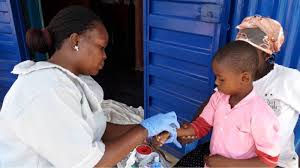
The clinics we’ve established in Sierra Leone go far beyond what we might consider a standard school health clinic in the United States. For students, teachers, administrators, and often their extended families and nearby villagers, they are the primary and most accessible source of healthcare. Many of these individuals are unable to make the arduous five-mile journey over rough terrain to the nearest government hospital – we encounter them as well. At our clinics, all services and medications are provided entirely free of charge.

The most common—and most dangerous—illnesses we treat are Malaria and Typhoid. If left untreated, both can be life-threatening. That’s why our nurses test nearly every patient for these diseases on the spot. With immediate access to life-saving medications, students are often well enough to return to class within a few days.
Yengema, where our second clinic is located, lies in Sierra Leone's diamond-mining region. Though personal mining is illegal, many still dig for diamonds, knowing that even a single small stone could provide food and education for their family. The search involves digging deep holes that often fill with stagnant water—ideal breeding grounds for mosquitoes, and a major contributor to the high incidence of Malaria in the area.
Our nurses do much more than treat illness. They offer health education classes, teach disease prevention, raise awareness of mental health, and engage students in open discussions about pregnancy prevention and other relevant topics. At the elementary school, a bone soup program ensures every child receives at least one nutritious meal each day. The secondary school is now developing a breakfast program, as many students arrive after walking miles, often on an empty stomach.
There is still much to be done. But every effort, no matter how small, is met with profound gratitude. And we are deeply honored to serve.
Today, the community trusts us. They know we will return. And we will—again and again—because we believe in the power of consistency, compassion, and care. We cannot turn away.
It is Ashley’s Clinic that gives us strength every single day. What began as a tribute to our beloved daughter has grown into a lifeline for so many—and along the way, our nurses have become our family. Together, we’ve shared in life’s most significant moments: we’ve celebrated a wedding, welcomed the birth of a child, and mourned through funerals. These bonds are deep and lasting.
We are deeply grateful to our nurses for their tireless commitment, courage, and unwavering dedication. They manage these clinics day in and day out, through the pounding rains of the wet season and the quiet strain of the hard days. Through all of it—the good and the bad—they show up. And because of them, so do we.
Ashley’s Clinic website address: https://shineonsierraleone.org/


Comments